
The Athena Research Center in Information, Communication and Knowledge Technologies is the coordinator of TEXTaiLES and was founded in 2003, taking under its umbrella three existing institutes (established as far back as 1991). It is based in Athens, with its Institutes located in Athens, Patras and Xanthi. ATHENA RC, has played a key role in the development of major existing initiatives offering virtual CH research environment, storage space for data, processing, and platforms, and has extensive experience in processing CH digitised content. Its expertise will enable the consortium to work seamlessly with ECCCH for the development, integration and usage of cloud tools. ATHENA RC has also the experience to attract users by connecting the major stakeholders in the CH ecosystem, developing scientific use cases in collaboration with the thematic communities, engaging the broader CH community and increasing its visibility. According to the ECCCH report the Europeana and Ariadne initiatives in which ATHENA RC participates will play a crucial role in its development contributing to the identification of competences, requirements, and potential integration of existing services as well as in selecting experts who might work on the ECCCH assessment of tools and services.
Resarchers involved
Dr. Georgios Ioannakis




George Alexis Ioannakis is a Principal Researcher (Researcher Grade B’) at Athena Research Center with experience in European and national R&D projects, where he has contributed to and coordinated complex, interdisciplinary research efforts. His background spans 3D mesh processing, computer vision, and machine learning. In TEXTaiLES, he serves as the coordinator of the consortium.
Read more
He received his Diploma (B.Eng, M.Eng) in Rural and Surveying Engineering of the Aristoteles University of Thessaloniki (AUTh) in 2011. In 2018, he received his PhD degree from the Electrical and Computer Engineering Department (ECE) of the Democritus University of Thrace (DUTh) in the research domain of 3D mesh processing and information retrieval. Since 2013, he has joined the Institute for language and Speech processing (ILSP) of the Athena Research Center (ARC) as a member of the Multimedia Research Group. As of 2020, Dr. Ioannakis is an assistant researcher at the Institute for Language and Speech Processing of ARC. His research interests include processing, content-based retrieval and classification of three-dimensional (3D) polygonal meshes, photogrammetry, digital image processing, pattern recognition, machine learning and the construction and programming of UAVs (Unmanned Aerial Systems).
Dr. Vassilis Katsouros

Vassilis Katsouros is the Director of Institute for Language and Speech Processing (ILSP) at the Athena Research Center (ATHENA RC) since June 2019. He received his M.Eng. degree in Electrical and Computer Engineering from the National Technical University of Athens (NTUA), Greece, in 1992.
Read more
In 1993 he obtained the M.Sc. with distinction in Communications and Signal Processing from Imperial College of Science Technology and Medicine, University of London, UK. In 1997 he received his Ph.D. degree in Mathematical modelling and Stochastic Control from Imperial College. Since 1998 he has been working at the ILSP, as head of the Quality Assurance Office (1999-2003), in 2004-2007 he has elected Researcher at ILSP, in 2008-2015 he has promoted to Senior Researcher and in 2015-today he has promoted to Researcher Director. He has been elected as President of the Scientific Council of ILSP for the period 2009-2018, as member of the Board of Athena RC since 2016-2019 as an elected representative of the Researchers and Vice-President since 2019. He was among the founding members of LibrisTech, the first spin-off company of ILSP, where he acted as managing director until September 2004 and until 2010 he was President of the Board. He is also Member of the Board at the Information Society S.A since June 2019. His research interest involves digital signal processing, statistics analysis, machine learning and artificial intelligence with applications in a wide variety of signals and data (voice, music, image, video, sensorial data, etc.) He has authored a significant number of scientific publications in the above fields in books, scientific journals as well as international conferences. He has supervised doctor thesis and postgraduate thesis as well as teaches in postgraduate programs in his research subjects. He has also participated in the organization international conferences such as ΙCFHR 2014, he has participated in international competitions in handwriting processing technologies (ICDAR & ICFHR Contests), music technology (MIREX) and sensor data analysis (PHM Data Challenge) with among the best submissions and his is also reviewer in scientific journals and international conferences. He has coordinated the quality control of various commercial products and software systems, he has been involved in research and development programs at national and European level, having the role of the coordinator, the scientific manager or a member of scientific teams. He is member at the IEEE (Institute of Electrical and Electronic Engineers) since 1992, of the Technical Chamber of Greece since 1992. Since 1999 he is a certified market maker/trader of the Derivatives Market at the Athens Exchange and of the ACM (Association for Computing Machinery) since 2005.
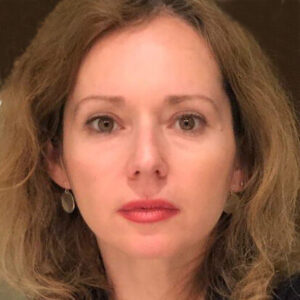
Dr. Christina Magrariti
Dr Christina Margariti gained her BA(Hons) in Conservation from the University of the Arts London and her MA in Textile Conservation at the Textile Conservation Centre/University of Southampton, UK, where she also completed her PhD.
Read more
She was a Marie Sklodowska Curie Fellow at the University of Copenhagen (project FIBRANET, 2017-2019). She is the Head of the Applied Research Department at the Directorate of Conservation/Hellenic Ministry of Culture and a collaborator of the Athena Research Center through the project TEXTaiLES. In the COST Action CA19131 EuroWeb, Europe through Textiles (2020-2024), she was the Leader of WG1 Textile Technologies and she is responsible for the instrumental analysis of Mycenaean textiles at the ELIDEK program FAROS, The Fabric of Kings (2023-2025, PI S Spantidaki). She has taught textile conservation at the Technological Educational Institute of Athens (now University of West Attica), the UCL Qatar, and the University of Copenhagen.
Thomas Pappas

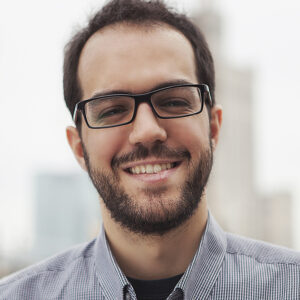
Mr. Thomas Pappas has a bachelor’s degree on Mathematics and a master’s degree in Algorithms, Logic and Discrete Mathematics from the National Kapodistrian University of Athens and the National Technical University of Athens.
Read more
During his master thesis he studied selfish routing games while his academic interests are pattern emergence and evolutionary game theory. During his studies he also started working as a Backend Web Developer for which he has over 10 years of experience in the field. Lately, he’s been working at the Athena Research Center as a Researcher Associate where he tackles problems around Computational Geometry, software analysis and ML algorithm optimisation.
Stelios Alvanos
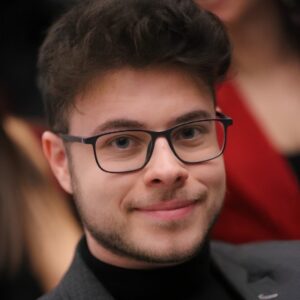
Mr. Stelios Alvanos is an EECE graduate from the Democritus University of Thrace since 2024. Currently, he is a PhD candidate under prof. Nikolaos Mitianoudis. His research interests involve machine learning and its applications to image and audio, with a current focus on machine learning applications in music information retrieval. He is currently a research associate at the Athena Research Center specializing in software development and machine learning operations.
Christos Chatzisavvas
Mr. Christos Chatzisavvas received the Diploma in Electrical and Computer Engineering from the Democritus University of Thrace (DUTh), Greece in 2024, where he is currently working toward the Ph.D. degree. He is also a Research Associate at the Athena Research Center. His research interests focus on Computer Vision and Unsupervised Learning, with applications in Object-Centric Learning and Semantic Segmentation.

Hercules Gousis
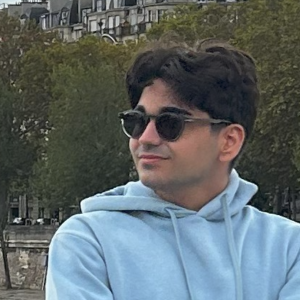
Mr. Hercules Gousis is a 5th-year student in the Department of Electrical and Computer Engineering at the Democritus University of Thrace.
Read more
His research interests focus on robotics, 3D modeling and design, and computer graphics. His thesis involves the design of an autonomous platform for 3D object digitization and the implementation of autonomous 3D reconstruction algorithms on real robotic platforms. He is currently a research intern at the Athena Research Center , where he specializes in robotics applications and 3D object reconstruction.
Dr. Despina Tsiafaki
Dr. Despoina Tsiafaki is a classical archaeologist, Director of Research, and Head of the Culture and Creative Industries Department at the Institute for Language and Speech Processing (ILSP), Athena Research Center. Her work bridges archaeology, digital humanities, and cultural heritage, with a focus on visual culture, identity, and connectivity in Northern Greece and the Aegean.
Read more
Since 1994, she has participated in the Karabournaki excavation (Thermaic Gulf) and has co-directed it since 2014. She has led and contributed to interdisciplinary projects involving digital documentation, metadata design, and the development of FAIR-aligned research infrastructures. Her expertise includes managing archaeological datasets, comparative collections, and the digital transformation of heritage research. Dr. Tsiafaki also addresses the ethical and epistemological dimensions of digital heritage and AI in archaeology. She actively fosters collaboration between humanities and technical domains and contributes to national and European initiatives promoting innovation, accessibility, and responsible use of archaeological data.

Vaia Zachari
Ms. Vaia Zachari is an EECE graduate of Democritus University of Thrace. She is currently a PhD candidate at Democritus University of Thrace under the supervision of Prof. Ioannis Pratikakis.
Read more
Her research interests include 3D reconstruction and scene understanding, with a focus on computer vision and machine learning methods for 3D data. She is also a research associate at Athena Research Center, where she works on robot-acquired 3D data, focusing on the automatic identification of problematic regions in reconstructed scenes and the development of more automated, robust, and semantically enriched 3D reconstruction workflows.
Ioanna Kechribari
Ms. Ioanna Kechlimpari received the Diploma in Electrical and Computer Engineering from the Democritus University of Thrace, Greece, in 2024.
Read more
She has professional experience as an engineer, with a focus on field engineering and automation systems. She is currently a Research Associate at the Athena Research Center, where she works on cultural heritage and environmental projects, contributing to the development and management of datalake infrastructures.

Efstratios Politis
Mr. Efstratios Politis is an undergrad in Electrical and Computer Engineering at Democritus University of Thrace, where he is currently working on his diploma thesis on Design and Evaluation of Federated Learning Systems for Graph-Based Recommendation. He is also a Research Associate at Athena Research C enter, working on data management, API interfaces, systems architecture and data visualization. His scientific interests span a wide range of topics, from theoretical computer science (algorithms, graphs, data structures, topology) to hardware design and verification, nanotechnology and quantum computing, data analysis and visualization.

Sapienza University of Rome, established in 1303, is one of Europe’s oldest and largest universities. Renowned for its excellence in education and research, it offers a wide range of programs across diverse disciplines. Located in Italy’s capital, Sapienza combines historical heritage with innovation, attracting students and scholars from around the globe.
Resarchers involved
Dr. Francesca Coletti
Francesca Coletti graduated in Classical Archaeology at Sapienza University. Since 2013, she has obtained several national and international fellowships (funded by National Ministry, EU programmes) in microscopy and diagnostic techniques applied to textile materials in different preservation conditions, as well as in traditional weaving and dyeing techniques.
Read more
In 2020, she received her PhD in co-tutorship at the Heidelberg and Sapienza Universities with a thesis focused on the fabric remains from the Vesuvian area and the textile imprints on the human plaster casts from Pompeii. Dr. Coletti is a Research Fellow at the Department of Science of Antiquity, dedicated to winners of the Seal of Excellence awarded in 2023 under the European MSCA Post-Doctoral Fellowship program, with research focused on diagnostics, enhancement and conservation of textile artefacts and the digitization of archaeological, historical, and ethnographic textiles. Since 2018, she has taught “Archaeology and Archaeometry of Textiles” in the Fashion Studies course at the SARAS Department.
Prof. Marco Galli
Marco Galli is Full Professor of Classical Archaeology at the Department of Classics of Sapienza University of Rome, where he also directs the A3TEX Research Centre for Archaeology and Archaeometry of Ancient Textiles. He holds a PhD in Classical Archaeology from the University of Cologne and a degree in Classics from the University of Bologna.
Read more
He is also Associated Research Fellow at ISPC-CNR, Editor in Chief for funding of Asia Minor. An International Journal of Archaeology in Turkey, visiting professor at Humboldt University in Berlin, Corresponding Member of the German Archaeological Institute, and Full Member of the Mommsen-Gesellschaft. His research spans Roman and Greek archaeology, architecture and sculpture, sacred and domestic spaces, ancient textile culture, Asia Minor, and the historiography of classical archaeology. He currently leads major projects including Textile Culture at Pompeii, Basilica Iulia at the Forum Romanum, Teos Dionysos Tempel, ADigTex, and ARIMINUM. In 2009 he received a presidential award for the exhibition project Machina.

CERTH is Greece’s largest research centre, with expertise in fields such among others, such as Image and Video Analysis, Multimedia Understanding, Virtual and Augmented Reality, Artificial Intelligence. CERTH will develop a 4D digital twin platform to facilitate the virtual inspection and remote examination of CH textile artefacts, coupled with automatic restoration tools for the digital reconstruction of fragmented or damaged artefacts. Additionally, they will deploy routing and navigation algorithms for ground and airborne vehicles to conduct detailed scans of complex or oversized artefacts.
Resarchers involved

Prof. Athanasios Kapoutsis
Athanasios Kapoutsis is an Assistant Professor in the Department of Electrical and Computer Engineering (ECE) at Democritus University of Thrace (DUTH) and the head of the AUtonomous Robotics Agents (AURA) Lab.
Read more
His research interests include, i) inducing autonomy in real-world multi-robot systems, ii) spanning coverage/exploration path planning for UAVs/UGVs/AUVs, iii) reinforcement learning and multi-agent RL, and iv) large-scale distributed/adaptive control. During the past years, he has contributed to a broad portfolio of competitively funded R&D projects spanning EU FP7, H2020 and Horizon Europe programmes, as well as Greek national initiatives—taking on responsibilities ranging from key technical roles to project leadership. Across his work in competitively funded R&D, he has served through three institutional affiliations: the Information Technologies Institute (ITI) of the Centre for Research & Technology Hellas (CERTH), the Department of Electrical and Computer Engineering at the Democritus University of Thrace (DUTH), and the Institute for Language and Speech Processing (ILSP) of the Athena Research and Innovation Center (ARC).
Dr. Dimitrios Koutras
Dimitrios Koutras graduated from the Department of Electrical and Computer Engineering of D.U.Th (2016). During his undergraduate studies he received a number of scholarships and awards of excellence.
Read more
In November 2018, he began his studies as a PhD candidate in the same department, in the Automatic Control Systems and Robotics Lab, under the supervision Pf. Elias Kosmatopoulos and was finalised by the end of 2024.
Since 2017 she has been working as a Research Associate at the Institute for Sustainable Mobility and Transport Networks (HIT) of the Center of Research and Technology Hellas (CERTH). At the same time, since 2019 he has been working as a Research Associate at the Information Technologies Institute (ITI) of the same Center, as a member of the ConvCAO team. His research interests focus on the field of Artificial Intelligence, Automated Driving, Data Driven Control, Knowledge Management and Decision Making Systems.

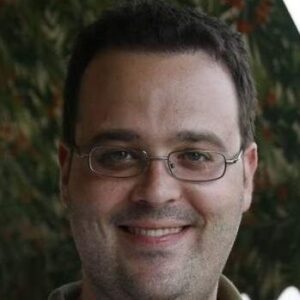
Dr. Stefanos Vrochidis
Dr. Stefanos Vrochidis is a Senior Researcher (Grade B’) at the Information Technologies Institute of the Centre for Research & Technology Hellas (CERTH) and Head of the Multimodal Data Fusion and Analytics (M4D) Group of the Multimedia Knowledge & Social Network Analysis Laboratory.
Read more
He received the Diploma degree in Electrical Engineering from Aristotle University of Thessaloniki, Greece and the MSc degree in Radio Frequency Communication Systems from University of Southampton, in 2000 and 2001 respectively. He also holds a PhD degree on Interactive video retrieval using implicit user feedback, Queen Mary University of London (2013). He has participated in a number of EC-funded and National ICT projects (e.g. ELU, PATExpert, REACH, PESCaDO, CHORUS) and his research interests include multimedia analysis, indexing and retrieval, human computer interaction in multimedia retrieval, patent search, environmental and learning applications. His scientific work has been published in peer-reviewed journals, international conferences and book chapters.
Panagiotis Giannakeris
Panagiotis Giannakeris holds a Diploma in Informatics and Telecommunications Engineering and a Master’s degree in Digital Media and Computational Intelligence.
Read more
His experience as a research associate at the Centre for Research & Technology Hellas focuses on the research and development of computer vision and machine learning techniques, with emphasis on applying advanced AI methods to real-world problems. His work has contributed to national and European research projects (TEXTaiLES, ASHVIN, NESTOR, 7SHIELD, REA, beAWARE), carrying out R&D activities in areas such as visual perception, intelligent multimedia analysis, data-driven modelling, and applied machine learning. His broader research interests include computer vision, deep learning, multimedia technologies, and computational intelligence.

The University of Warsaw, founded in 1816, is Poland’s largest and most prestigious university. Known for academic excellence and cutting-edge research, it offers diverse programs across humanities, sciences, and social sciences. Situated in Warsaw, the vibrant capital, it fosters international collaboration and cultural exchange, attracting students and scholars worldwide.
Resarchers involved

Prof. Agata Ulanowska
Agata Ulanowska – habilitated Ph.D., is Associate Professor at the Faculty of Archaeology, University of Warsaw, Poland and has held the chair of the Department of Aegean and Textile Archaeology since 2023.
Read more
Her research interests focus on Aegean archaeology, particularly Minoan Crete, as well as textile, experimental and gender archaeology. She has been awarded two grants from the National Science Centre of Poland, for the projects: “Textile production in Bronze Age Greece – comparative studies of the Aegean weaving techniques” (2015–2017) and “Textiles and Seals. Relations between textile production and seals and sealing practices in Bronze Age Greece” (2018–2022). She has served as Chair of the COST Action CA 19131 “EuroWeb. Europe Through Textiles: Network for an integrated and interdisciplinary Humanities” (2020–2024). Currently, she is the beneficiary and local coordinator of the project “TEXTile digitisAtIon tooLs and mEthodS for cultural heritage (TEXTaiLES)”, HORIZON REA action 101158328 (2024–2027) and the leader of the project “Exploring Textile Imprints on Clay from the 3rd and the 2nd Millennia BCE: Advancing Cutting-Edge Research and Documentation Protocols with Case Studies of Diverse Textile Consumption Contexts (ExplorTIC)”, NCN SONATA BIS, 2023/50/E/HS3/00094/ (2024–2027).
Katarzyna Żebrowska
Katarzyna Żebrowska (PhD) is an Assistant Professor at the Faculty of Archaeology, University of Warsaw, Poland.
Read more
She specializes in the archaeology of prehistoric Sicily and the Aegean region, with a particular focus on Italo-Aegean contacts and funerary architecture, especially in relation to landscape. Her research interests also include textile archaeology, specifically the functionality of textile tools, as well as Aegean seals and sealing practices. She was awarded the PRELUDIUM 11 grant from the National Science Centre of Poland for her research project “Sicilian Textile Tools from the Bronze Age: Examination of Finds and Comparative Studies on Their Functionality” (2017-2019).
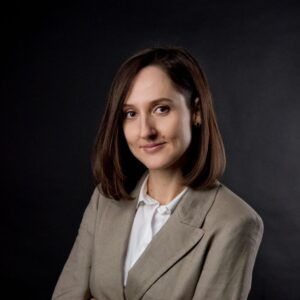

Marek Truszkowski
Marek Truszkowski is an archaeologist and a staff member at the Faculty of Archaeology, University of Warsaw. He is a PhD candidate working on a dissertation focused on Teutonic brick architecture. He specializes in digital archaeological documentation techniques, particularly 3D methods such as 3D scanning, photogrammetry, and RTI (Reflectance Transformation Imaging). His work combines traditional research approaches with modern technologies, enabling precise recording and interpretation of archaeological artifacts.
Nazarij Buławka
He holds a PhD in archaeology from the University of Warsaw focused on the Iron Age in Turkmenistan (Yaz culture). I have recently finished the MSCA project related to ancient irrigation studies using advanced remote sensing methods (UnderTheSands). I am currently employed in the Department of Archaeology at the Faculty of Archaeology, University of Warsaw. My main research focus is applying deep learning in water management studies and landscape archaeology. (source: researchgate)
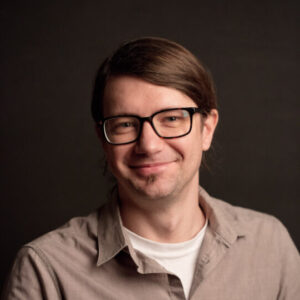

The University of Oulu, established in 1958, is one of Finland’s leading multidisciplinary universities. Located in northern Finland, it excels in Arctic research, sustainable development, and technological innovation. With a strong focus on collaboration and community impact, the university offers diverse programs and fosters global partnerships to address future challenges.
Resarchers involved

Prof. Sanna Pipkin
Sanna Lipkin (PhD) is a University Research Fellow at the University of Oulu and a Docent in Textile Archaeology at the University of Turku. She has specialized knowledge in the research of Late Medieval and Post-Medieval burial clothing, using scientific methods including computed tomography. She is also interested in the research ethics of church burials, mummified remains, and archaeological textiles. In her two recent research projects (2017–2023) funded by the Research Council of Finland, she and her research group studied childhood in Post-Medieval Finland from the viewpoint of emotions, child death, burial and funerary attire.
Samuel Reinikainen
Samuel Reinikainen is a project researcher at University of Oulu, engaged in applying close-range photogrammetry solutions on early modern Finnish burial clothing using polarising equipment. He is also writing a doctoral thesis in archaeology at University of Helsinki concerning the traceology of ancient iconoclasm of stone monuments in the ancient Near East.

TechnAI, based in Barcelona, Spain, is a for-benefit company whose mission is the democratisation of technology and its application in areas such as culture, arts, social applications, and sustainability by making technology accessible and beneficial to society as a whole. It’s role in TEXTaiLES is the dissemination and communication of the project, the exploitation of its results are well as contribution in software integration.

NUBIS PC has more than 20 years of experience in designing, building, and maintaining multi-stack systems, with a strong academic and industry background. NUBUS PC has been involved in engineering teams that brought research tech to market, as well as conducting research, acknowledged by refereed publications in academic consortia. Their main role in the TEXTaiLES is the integration of the digital tools of the project to the European Collaborative Cloud for Cultural Heritage.

The Fraunhofer Society, founded in 1949, is Europe’s largest applied research organization, headquartered in Munich, Germany. It focuses on innovation-driven research in diverse fields, including engineering, life sciences, and information technology. Collaborating with industries and governments, Fraunhofer drives technological advancements, strengthens the economy, and addresses global challenges through applied science. Its role in TEXTaiLES is the development of methods for the analysis, modelling and simulation of the dynamic behaviour of textile artefacts.
Resarchers involved
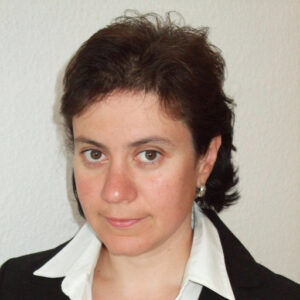
Dr. Julia Orlik
Since 01/2000, Julia Orlik is a researcher at Fraunhofer Institut für Techno- und Wirtschaftsmathematik (ITWM) in Kaiserslautern. 11/2013-08/2014 she had W-2 Professorship for Applied Mathematics at University of Applied Sciences Rhein-Main in Wiesbaden, Germany.
Read more
Her research area is Modeling and Asymptotic analysis for PDEs in periodic and thin structures. Her especially impact are new asymptotic dimension reduction and homogenization algorithms for elastic heterogeneous fiber structures and shells, like textiles. She submitted, performed and supervised DFG, AIF, BMBF European, industrial projects and supervised 10 PhD students. Under her supervision software TexMath was developed. She has many publications in Q1 journals in applied mathematics and mechanics. She is a managing editor in „Proceedings of Royal Society A”, Q1-journal in Mathematics, Mechanics and Engineering.
Dr. Maxime Krier
Maxime Krier is an applied mathematician with research focus on computational methods for the mechanical characterization and optimization of textiles and fiber structures. He earned his PhD in 2024 at RPTU Kaiserslautern and the department of flow and material simulation of Fraunhofer ITWM, specializing in modeling of fluid-structure interactions with textile filters.
Read more
In addition to textiles, he has worked on the simulation of electrochemical processes in batteries and semiconductor components, as well as of high-cycle fatigue in fiber-reinforced composites. In the TEXTaiLES project, his focus is on the development of numerical tools for dynamic textile draping, folding and contact problems.

ACCELIGENCE Ltd. is specialised on the design, development, system integration and verification of custom-made robotic solutions, with a particular focus on Unmanned Aerial Vehicles (UAVs). It’s main role in TEXTaiLES is the development and adaptation of UAVs with mounted cameras and sensors for digitising large textile objects
Resarchers involved
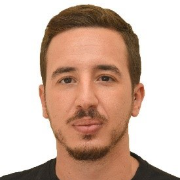
Dimitris Perikleous
Dimitris Perikleous is a Mechanical and Aeronautical Engineer with an Integrated Master’s degree in Mechanical Engineering and Aeronautics from the University of Patras, awarded in 2021, with a specialization in Aeronautics.He has extensive experience across all stages of UAV development—conceptual, preliminary, and detailed design. His focus areas include CAD design, Computational Fluid Dynamics (CFD), and aerodynamic optimization.In recent years, Dimitris has also taken on project management roles in several EU-funded research and innovation projects (CHAMELEON, ODYSSEUS, iDriving, TEXTaiLES, CYGNUS), where he oversees project execution, monitors progress, and coordinates technical tasks and deliverables.
Andreas Lefkatis
Andreas Lefkatis holds a Bachelor’s Degree in Mechanical Engineering and a Master’s Degree in Aeronautics from the University of Patras. He has worked as a Mechanical & Aeronautical Engineer at Acceligence LTD for the past two years, focusing on designing UAV prototypes and managing European-funded projects. Andreas has played a key role in innovative initiatives, including TREEADS, TEXTAILES, IDRIVING, ODYSSEUS, TESTUDO, XTRACT, and CYGNUS.


The Textile Museum St. Gallen, located in Switzerland, showcases the region’s rich history of textile production and innovation. Renowned for its exquisite embroidery collections, it highlights traditional techniques and modern design. The museum also explores the cultural, artistic, and industrial significance of textiles, serving as a hub for inspiration and education. Their main role in TEXTaiLES is the use of their collection for digitisation and the dissemination and the project results to museum communities.