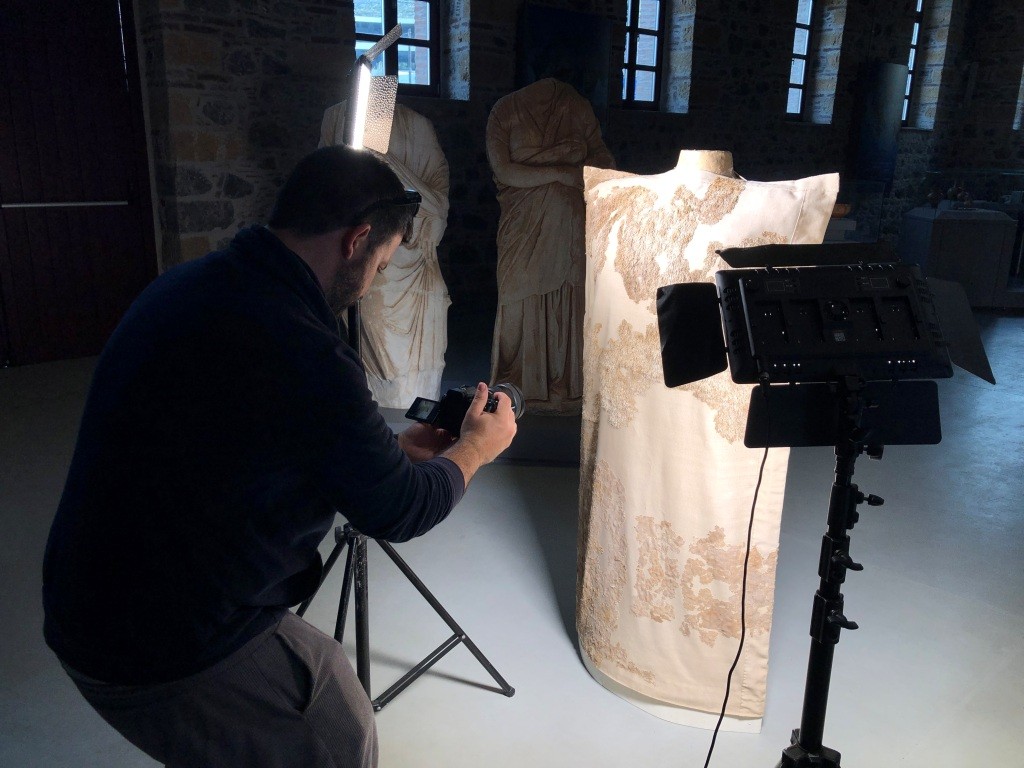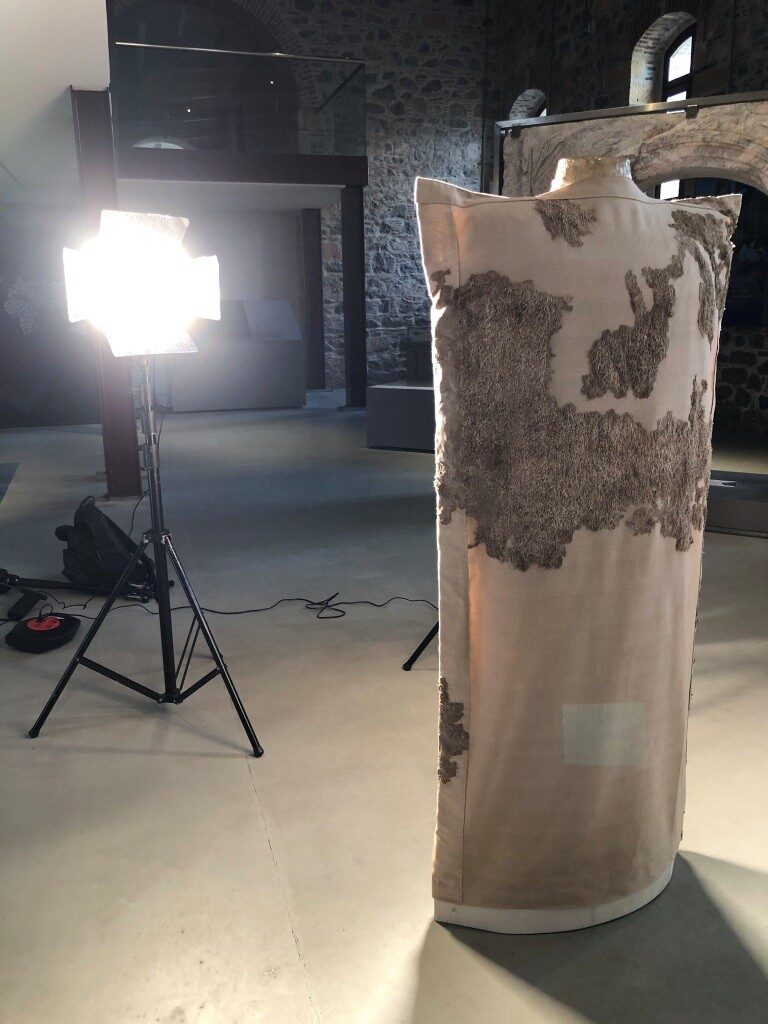
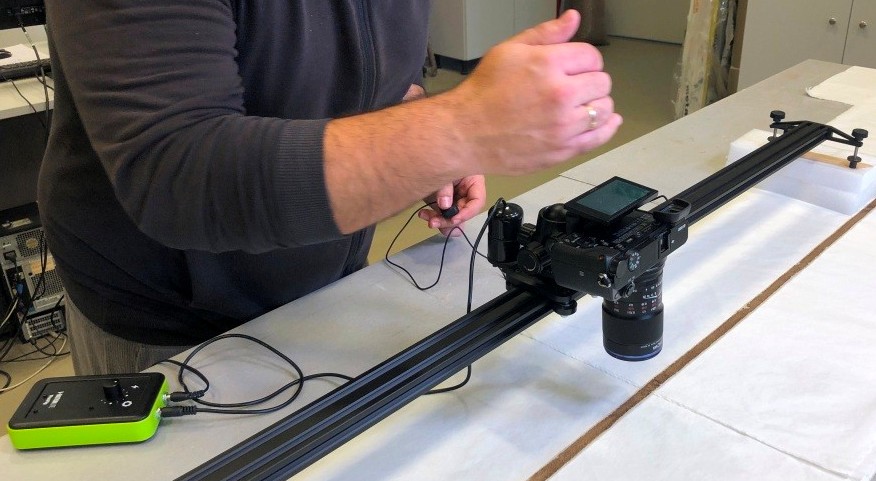
As part of the TEXTaiLES project, a digitisation campaign was carried out at the Archaeological Museum of Chalkis Arethousa, focusing on a remarkable 10th-century BCE textile find from Lefkandi. This rare burial textile, distinguished by its intricate looped weave and decorative woven bands, offers valuable insight into prehistoric textile craftsmanship and mortuary practices.
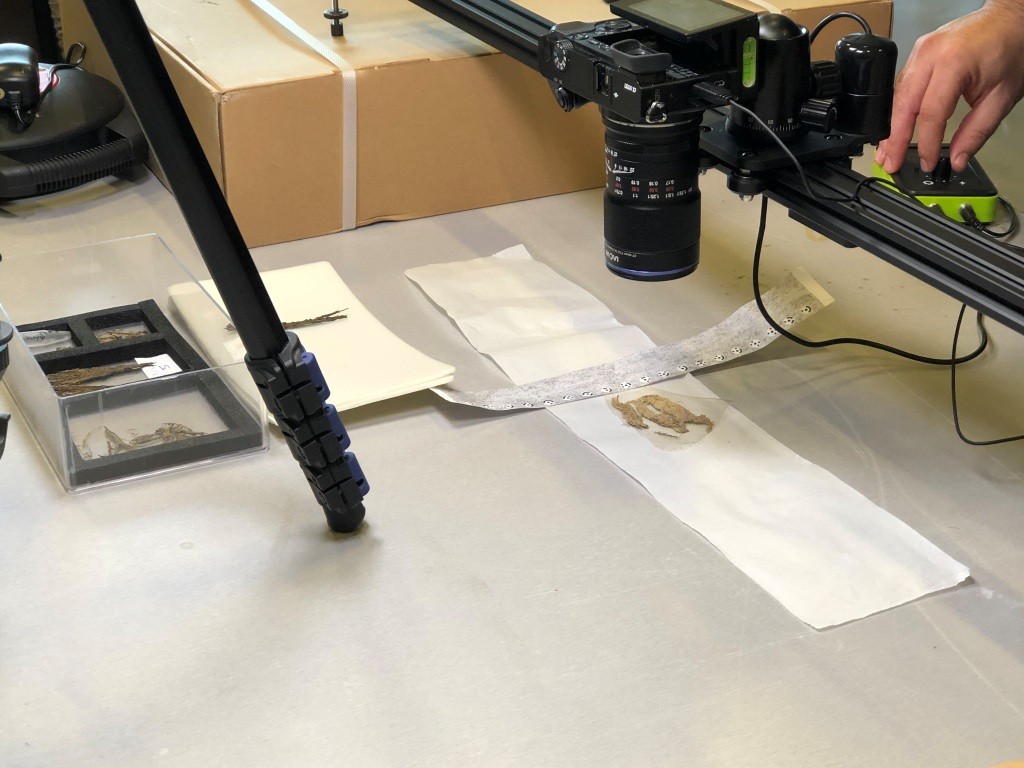
To document this fragile artefact, the team applied two complementary digital methods. Photogrammetry was used to create an accurate high-resolution 3D model, preserving the textile’s geometry, texture, and colour. In parallel, Reflectance Transformation Imaging (RTI) enabled the detailed recording of subtle surface features, such as weave patterns, depressions, and traces of use, which are not easily visible to the naked eye.
The digitisation of the Lefkandi textile contributes to its long-term preservation and digital accessibility, supporting future research and advancing innovative approaches to textile heritage documentation within the TEXTaiLES project.